


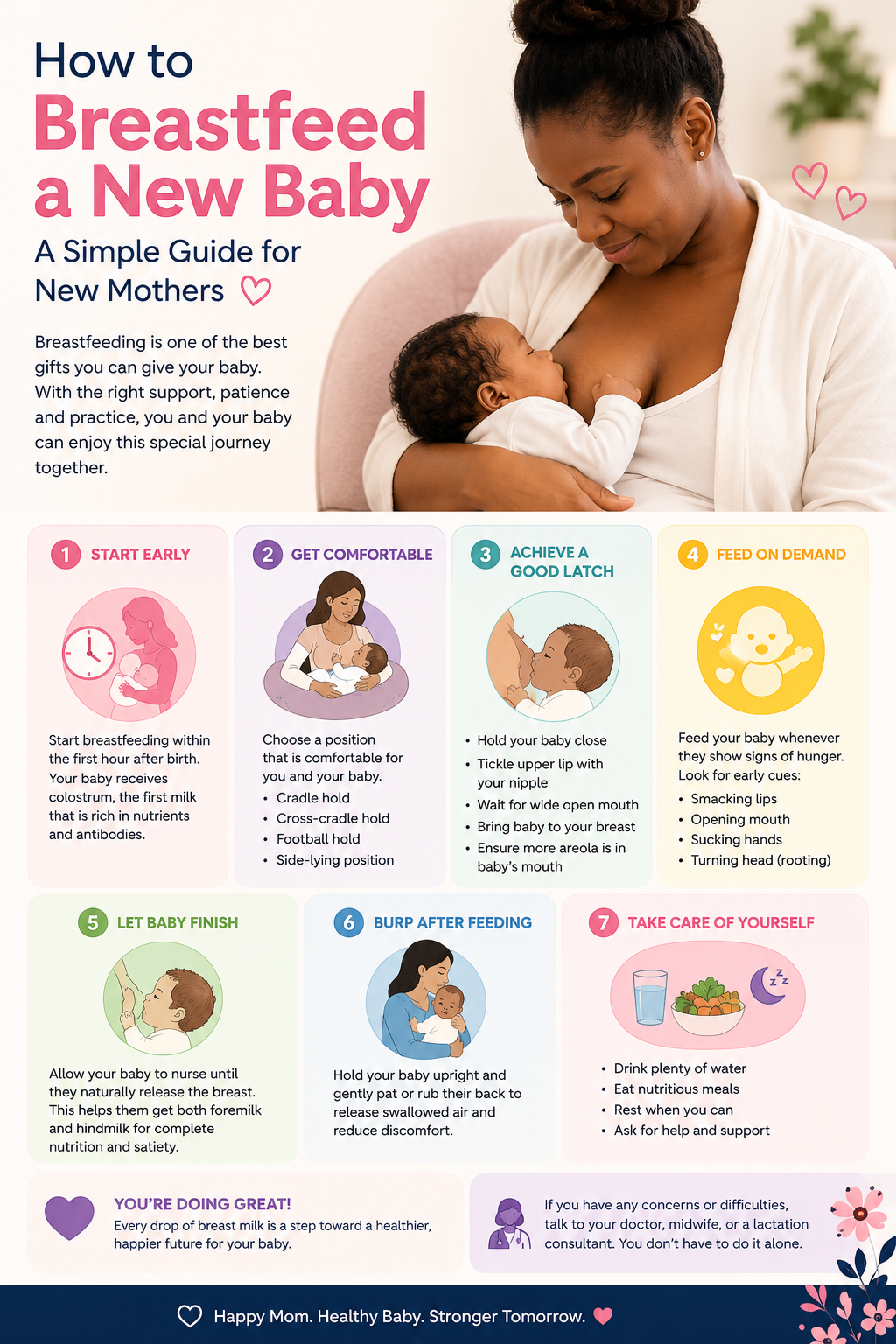
Breastfeeding is one of the most rewarding ways to nourish and bond with your newborn. While it is a natural process, it doesn't always come naturally at first. Many new mothers need time, patience, and practice before breastfeeding becomes comfortable.
The good news is that with the right support and guidance, you and your baby can develop a successful breastfeeding routine.
1. Start Breastfeeding Early
Whenever possible, begin breastfeeding within the first hour after birth. Your baby is usually alert during this period and instinctively searches for the breast. Early breastfeeding helps stimulate milk production and provides your baby with colostrum—the thick, yellow first milk that is packed with nutrients and antibodies.
2. Get Your Baby into a Comfortable Position
Choose a position that is comfortable for both you and your baby. Some common breastfeeding positions include:
Cradle hold
Cross-cradle hold
Football hold
Side-lying position
Whichever position you choose, make sure your baby's head, neck, and body are aligned in a straight line, facing your breast.
3. Help Your Baby Latch Properly
A good latch is essential for successful breastfeeding.
To achieve a proper latch:
- Hold your baby close to you.
- Gently tickle your baby's upper lip with your nipple.
- Wait for your baby to open their mouth wide.
- Bring your baby to your breast—not your breast to the baby.
- Ensure your baby takes in not only the nipple but also a large part of the darker area around it (the areola).
A proper latch reduces nipple pain and allows your baby to feed effectively.
4. Feed on Demand
Newborns usually feed every 2–3 hours, but it's best to feed whenever your baby shows signs of hunger rather than waiting for them to cry.
Early hunger cues include:
- Smacking or licking lips
- Opening and closing the mouth
- Sucking on hands or fingers
- Turning the head in search of the breast (rooting)
Responding to these cues makes feeding easier and helps keep your baby satisfied.
5. Allow Your Baby to Finish Feeding
Let your baby nurse until they naturally release the breast. This ensures they receive both the foremilk, which quenches thirst, and the richer hindmilk, which provides extra calories and healthy fats needed for growth.
After one breast is emptied, offer the other breast if your baby is still hungry.
6. Burp Your Baby After Feeding
After each feeding, hold your baby upright against your shoulder or sit them on your lap while gently patting or rubbing their back. Burping helps release swallowed air and can reduce discomfort and spitting up.
7. Take Care of Yourself
Your body needs extra energy to produce breast milk.
Remember to:
- Drink plenty of water.
- Eat a balanced, nutritious diet.
- Get as much rest as possible.
- Ask family members for help when needed.
A healthy mother is better able to care for a healthy baby.
Common Challenges
It's normal to experience some difficulties during the early days of breastfeeding. You may notice sore nipples, breast fullness, or concerns about milk supply. Most of these issues improve with proper positioning, a good latch, and frequent feeding.
If breastfeeding remains painful or your baby is not gaining weight, seek help from your doctor, pediatrician, midwife, or a certified lactation consultant.
Final Thoughts
Breastfeeding is a journey that takes patience, practice, and support. Every mother and every baby are different, so avoid comparing your experience with others. Focus on learning together, and remember that each successful feed is a step toward giving your baby the best possible start in life.
If you have concerns or questions about breastfeeding, don't hesitate to speak with your healthcare provider. Early guidance can make a significant difference and help you enjoy a positive breastfeeding experience.